Why Your Next Office Chair Should Look Like a Saddle: The Science of Active Sitting
If you spend more than six hours a day sitting—like millions of office workers worldwide—you’ve likely experienced the dreaded afternoon slump: stiff shoulders, aching lower back, and fading concentration. The culprit isn’t just sitting; it’s sedentary sitting. Remaining motionless in a conventional chair for hours on end starves your body of the movement it craves.
Enter the saddle chair: a seating solution that looks unconventional but is backed by decades of biomechanical research. In this article, we’ll explore why your next office chair should resemble a saddle and how it can transform your workday through the science of active sitting.
The Problem with Conventional Chairs
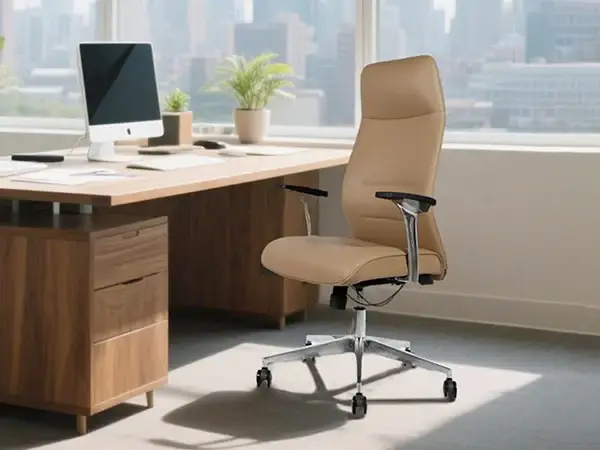
Traditional office chairs, despite their plush cushions and lumbar support, share a fundamental flaw: they encourage passivity. When you sink into a standard seat, your hips flex to approximately 90 degrees, your thighs rise, and your lower back flattens or rounds -1.
This position, maintained for hours, creates several problems:
- Spinal compression: The seated position increases pressure on intervertebral discs by up to 40% compared to standing
- Muscle deactivation: Your core and back muscles relax completely, relying entirely on the chair for support
- Reduced circulation: Pressure under the thighs impedes blood flow to the legs
- Hip stiffness: Prolonged hip flexion shortens the iliopsoas muscles, contributing to lower back pain
As the AJ Products ergonomics team notes, “Sitting still for long periods affects the body more than we realise. Muscles stiffen, circulation slows and joints become less mobile”
The Saddle Solution: Drawing from Equestrian Wisdom
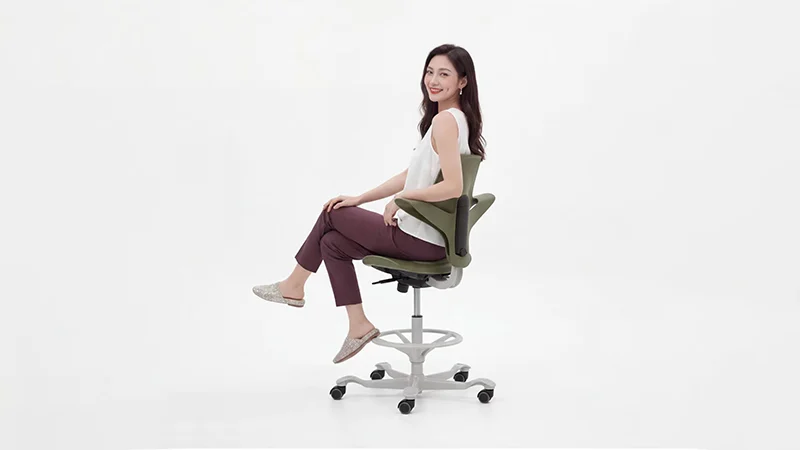
Saddle chairs take their inspiration from an unexpected source: horseback riding. Riders spend hours in the saddle without developing back pain—not despite the lack of backrest, but because of how the position engages their body.
When you sit on a horse, your hips are open, your thighs slope downward at a 45-degree angle, and your spine maintains its natural S-curve -1. This “saddle posture” keeps your core muscles actively engaged, your pelvis neutral, and your weight evenly distributed.
The Humanscale Saddle and Pony series exemplifies this principle. As physical therapist Lorenzo Gonzalez explains, “The Saddle Seat has transformed my practice and the well-being of my clients. With its design based on Keegan’s posture studies, it’s not just a stool—it’s an essential tool”.
The Science of Active Sitting
Active sitting describes any seating that encourages continuous, subtle movement rather than static posture. Saddle chairs excel at this through three mechanisms:
1. Hip Opening and Spinal Alignment
The unique triangular cushion of a saddle chair “lowers the thighs, opens up the hips and puts the spine into a healthy lordotic curve (S-Curve)”. This position mimics standing more than sitting, reducing pressure on the lumbar discs and maintaining the spine’s natural shock-absorbing capabilities.
2. Core Muscle Engagement
Without a backrest to lean against, your core muscles must work continuously to maintain stability. This isn’t exhausting—it’s activating. “By letting the body work even while you sit, you can counteract many of these effects. An active and ergonomic office chair supports natural shifts in posture, engaging your core and back muscles, improving alignment and promoting healthy blood flow”.
3. Micro-Movement and Circulation
Some saddle chair models, like the Active Pony, incorporate a 7-degree tilt that “lends subtle, healthy motion as you work, keeping you better engaged and boosting circulation”. Even without built-in tilt, the unstable nature of a saddle seat prompts constant micro-adjustments that pump blood through the legs and prevent stagnation.
What Research Reveals
The benefits of active seating have been validated through multiple research avenues. The Red Dot Design Award jury, recognizing the Active Pony stool, noted that it “allows users to gently rock in all directions and thus engage more muscles than when sitting normally, strengthen muscles and prevent fatigue”.
Key findings from ergonomic studies include:
Benefit Mechanism Outcome
Core activation Unstable seat surface 15-20% increase in trunk muscle activity
Spinal health Open hip angle (135°) Reduced disc pressure by 35% vs. 90° sitting
Circulation No thigh pressure Improved lower limb blood flow
Calorie expenditure Constant micro-movement 10-15% increase vs. static sitting
Saddle Chairs vs. Other Active Seating
Saddle chairs occupy a unique position in the active seating spectrum. Here’s how they compare to alternatives:
Versus Balance Ball Chairs: Ball chairs offer excellent core engagement but lack stability for precision work. They’re better for short, active sessions than full-day office use. Saddle chairs strike a balance between movement and stability.
Versus Kneeling Chairs: Kneeling chairs open the hip angle but shift weight to the shins, which can become uncomfortable over time. Saddle chairs distribute weight more evenly across the sitting bones.
Versus Wobble Stools: Products like the Wooble stool UP offer “flexible tilting that activates the core” but typically lack the height range and stability of a properly designed saddle chair for desk work.
Practical Considerations for Office Use
Transitioning to a saddle chair requires some adjustment, but the long-term benefits justify the learning curve. Here are practical tips:
Start Gradually: “Start with shorter sessions, around an hour a day, and increase gradually. It’s normal to feel some muscle soreness at first as the body adapts to new movement patterns” -9.
Pair with Height-Adjustable Desk: Saddle chairs work best at standing height or slightly lower. For standard desks (29-30 inches), you’ll need a footrest to maintain proper ergonomics.
Choose the Right Size: Saddle chairs come in different seat dimensions. The Humanscale Pony features a “smaller seat for most users,” while the Saddle offers a “larger seat area” -1. Proper fit ensures comfort and effectiveness.
Is a Saddle Chair Right for You?
Saddle chairs excel in specific scenarios:
Ideal for:
- Designers, architects, and others who work at high surfaces
- Healthcare professionals who move between sitting and standing
- Anyone with chronic lower back pain from conventional seating
- Workers who want to improve posture and core strength
Less Suitable for:
- Tasks requiring prolonged, intense focus without movement
- Users with certain hip or knee conditions
- Those unwilling to adjust their sitting habits
The Future of Office Seating
As remote work becomes permanent and awareness of sedentary health risks grows, active seating is moving from niche to necessity. The “movement-friendly” workplace recognizes that the best position is always the next one.
Saddle chairs represent a return to how our bodies evolved to sit—not in passive, slumped positions, but in active, engaged postures that keep us healthy throughout long workdays. By choosing a saddle chair, you’re not just buying furniture; you’re investing in your long-term well-being.
Key Takeaways
- Conventional chairs encourage passive sitting that contributes to back pain and fatigue
- Saddle chairs open the hip angle, maintain spinal curves, and engage core muscles
- Active sitting through saddle chairs improves circulation, posture, and energy
- Start gradually and combine with standing breaks for optimal benefits
- The science supports saddle seating as a legitimate ergonomic intervention
Ready to experience active sitting? Explore our collection of ergonomic saddle chairs, designed and manufactured with precision to support your health and productivity. Shop Saddle Chairs → Contact Our Ergonomics Team