The law office occupies a unique position in professional design. It must simultaneously convey tradition, authority, and stability—the bedrock values of legal practice—while supporting the intense, technology-driven work of modern attorneys.
At the intersection of these demands sits the office chair. More than any other furniture piece, the chair influences both client perception and attorney well-being. Getting it right requires understanding the unique needs of legal environments.
The Dual Demands of Legal Seating
Law office seating serves two masters: the client and the attorney.
For clients, seating must communicate professionalism, success, and attention to detail. The chair should make clients feel valued and reassured that they’ve placed their matters in capable hands.
For attorneys, seating must support long hours of intense focus—reviewing documents, drafting briefs, conducting research, and preparing arguments. It must prevent the physical strain that can accumulate over decades of practice.
Meeting both demands requires thoughtful selection and strategic placement.
Client-Facing Spaces: Building Trust Through Design
The Reception Area
First impressions form in the reception area. Here, seating choices signal the firm’s character:
Quality signals investment: High-quality leather chairs tell clients the firm invests in its environment—and by extension, in their cases.
Comfort communicates care: Comfortable seating makes waiting feel less burdensome, reducing anxiety before meetings.
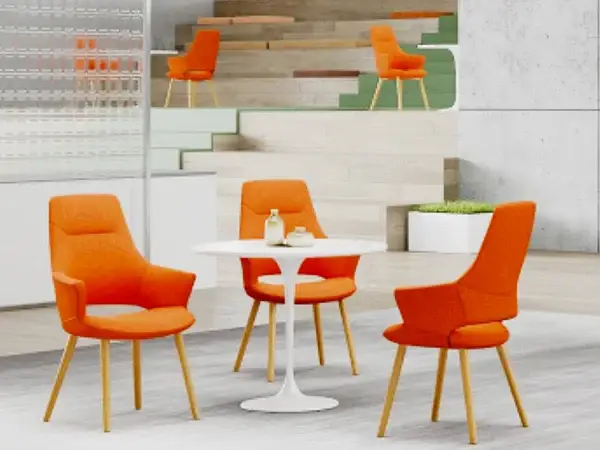
Arrangement affects atmosphere: Clusters of chairs create a more welcoming feel than rows of identical seating.
For reception areas, consider durable, easy-maintenance materials that will withstand heavy use while maintaining professional appearance. Top-grain leather or high-quality PU leather balances aesthetics with practicality.
The Conference Room
The conference room hosts critical moments—client meetings, depositions, negotiations, and strategy sessions. Seating here must support both presentation and collaboration.
Client chairs should be comfortable enough for multi-hour meetings without causing distraction. They needn’t match the partner’s chair exactly but should harmonize in quality and style.
Partner chairs at the head of the table may be slightly more substantial, signaling leadership while maintaining approachability.
Movement matters: Chairs should allow easy adjustment and repositioning as meeting dynamics shift.
The Partner’s Office
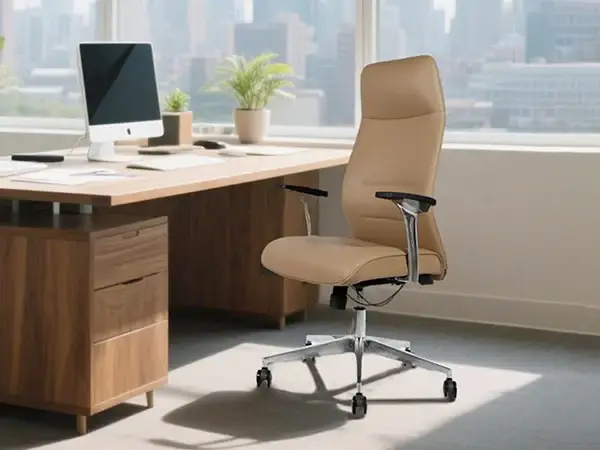
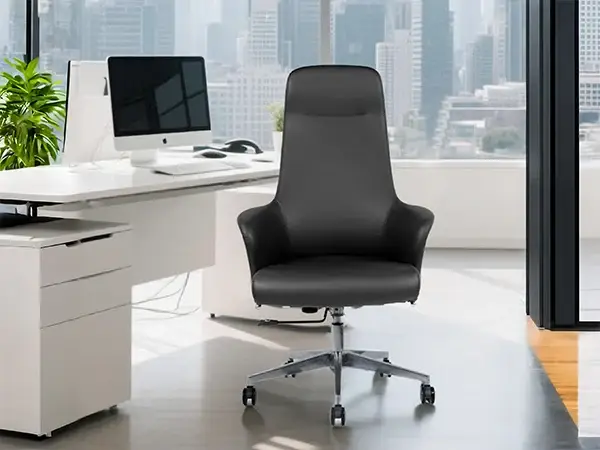
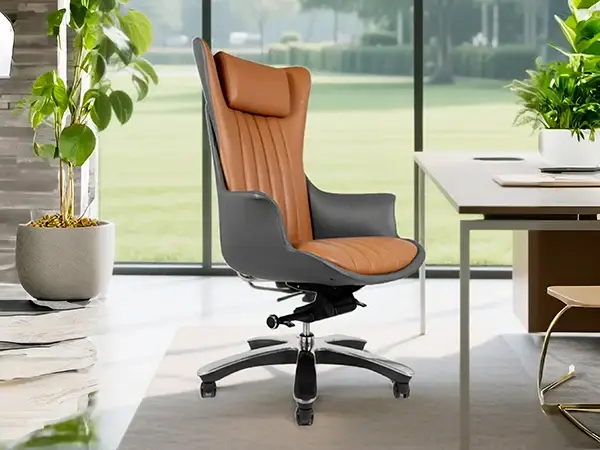
The partner’s office is where tradition is most visible. Here, full-grain leather executive chairs in classic styles reinforce the firm’s heritage and stability. But tradition needn’t compromise ergonomics:
“Modern executive chairs are engineered with sophisticated ergonomic features. According to OSHA’s guidelines for computer workstations, a good chair must have adjustable components to support a neutral posture”.
Look for executive chairs that conceal ergonomic adjustability within traditional silhouettes—lumbar support that works invisibly, armrests that adjust without announcing themselves.
Attorney Workstations: Where the Real Work Happens
Behind closed doors, attorneys spend thousands of hours at their desks. Here, ergonomics must take priority without sacrificing professional appearance.
The Document Review Challenge
Few tasks are as physically demanding as document review—hours of focused reading, often requiring constant mouse use and document handling. Without proper seating, this work leads to:
- Neck and shoulder tension from poor monitor positioning
- Lower back strain from inadequate lumbar support
- Wrist discomfort from improper armrest height
- General fatigue from static posture
Solutions include:
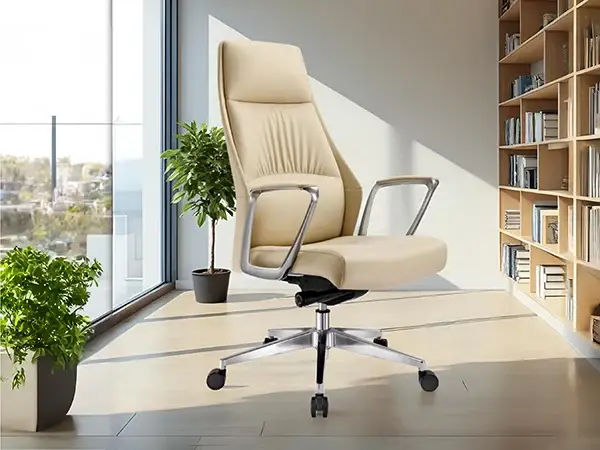
Fully adjustable chairs: Seat height, depth, armrests, lumbar support, and recline tension should all be adjustable to the individual.
Task-specific positioning: Chairs that support multiple work modes—upright for writing, slightly reclined for reading, forward for collaboration.
Movement encouragement: Designs that make it easy to shift positions throughout the day.
The Technology Integration
Modern legal work requires technology integration. Chairs must work seamlessly with:
Height-adjustable desks: Allowing attorneys to alternate between sitting and standing throughout the day.
Multiple monitors: Supporting proper positioning relative to screens.
Document cameras and other equipment: Accommodating the tools of modern practice.
Material Considerations for Law Offices
Leather: The Traditional Choice
Leather remains the material of choice for legal environments, and for good reason:
- Professional appearance: Leather commands respect and signals quality
- Durability: Quality leather withstands decades of use
- Easy maintenance: Spills wipe clean, important in high-stakes environments
- Aging gracefully: Leather develops character over time, unlike materials that look worn
For law offices, full-grain or top-grain leather represents the best investment. The initial cost is offset by longevity and maintained appearance.
Fabric Options
For firms seeking a slightly less formal atmosphere or needing specific performance characteristics, high-quality fabrics offer alternatives:
- Breathability: Some fabrics outperform leather for temperature regulation
- Color options: Wider range for design flexibility
- Acoustic properties: Fabric can help manage room acoustics
Material Combinations
Many modern law offices combine materials strategically:
- Leather seating surfaces for durability and appearance
- Mesh back panels for breathability during long sessions -6
- Wood accents to complement traditional office furniture
Addressing the Tall Attorney Challenge
Law firms attract individuals of all statures, and standard chairs don’t accommodate everyone equally. The tall attorney (195cm/6’5″) faces particular challenges:
“For a person of this stature, the ideal seat height is approximately 51.3 cm (20.2″). If this executive uses a standard 29-inch fixed desk, they face a significant ergonomic gap. The desk is effectively too low, causing a hunched posture that undermines professional presence and leads to chronic neck strain”.
Solutions include:
- Chairs with extended height ranges
- Height-adjustable desks paired with proper seating
- Custom sizing for permanent installations
The Aging Attorney Consideration
Many attorneys practice well beyond traditional retirement age. Seating must accommodate changing physical needs:
- Easier entry and exit (chairs with appropriate seat height and armrests that don’t obstruct)
- Adjustable lumbar support for changing back conditions
- Controls that remain operable with reduced hand strength
Multiple Offices, Multiple Needs
Modern attorneys often work across multiple locations—main office, home office, court appearances, client sites. Consistency in seating supports physical health:
Main office: Primary investment, fully featured ergonomic seating
Home office: Quality secondary seating that maintains postural habits
Travel: Portable lumbar support or brief consideration of temporary seating
The Wellness Imperative
Law firms increasingly recognize that attorney well-being affects practice quality. The American Bar Association and other professional organizations have highlighted the importance of physical health in preventing burnout and maintaining professional competence.
Ergonomic seating is part of this wellness picture. “An ergonomic executive chair encourages subtle movements and provides the support needed to prevent the strains and discomfort associated with long hours of work. It’s not just about looking successful; it’s about building a sustainable foundation for your work life”.
Case Study: A Modern Law Office Transformation
The Firm: Mid-sized litigation practice, 25 attorneys, preparing to move to new space
The Challenge: Balance traditional client expectations with modern ergonomic needs
The Solution:
- Partner offices: Full-grain leather executive chairs with hidden ergonomic adjustability
- Associate workstations: Top-grain leather task chairs with full ergonomic features
- Conference room: Mix of partner-style chairs at head and associate-style around table
- Reception: Durable top-grain leather in warm tones, arranged in conversational groupings
The Result: Clients consistently comment on the professional, welcoming atmosphere. Attorneys report reduced end-of-day discomfort. The firm projects confidence in both tradition and forward thinking.
Selection Checklist for Law Offices
Use this checklist when evaluating seating for legal environments:
For All Chairs:
- Professional appearance appropriate to setting
- Commercial-grade durability for daily use
- Easy-clean materials for spill resistance
- Appropriate sizing for intended users
For Attorney Chairs:
- Full adjustability (height, seat depth, armrests, lumbar)
- Support for multiple work positions
- Compatibility with height-adjustable desks
- Movement-friendly design for position changes
- 10+ year durability expectation
For Client-Facing Chairs:
- Comfort for 1-2 hour meetings
- Harmonious appearance with attorney chairs
- Appropriate scale for room size
- Easy entry/exit for all mobility levels
Design Your Law Office With Confidence
Our team understands the unique needs of legal environments. Contact us to discuss seating solutions that honor your firm’s tradition while supporting your attorneys’ well-being.
[Contact Our Professional Office Team] → [View Law Office Collection]