The active seating market has exploded with options promising better posture, stronger cores, and relief from back pain. But with saddle chairs, kneeling chairs, and balance ball chairs all claiming benefits, how do you choose?
Each design approaches the problem of sedentary sitting differently. Understanding their mechanisms, strengths, and limitations will help you select the right tool for your body and work style.
The Contenders: A Quick Overview
Chair Type Best For Key Trade-off
Saddle Chair Full-day office work, precision tasks Requires adjustment period
Kneeling Chair Short sessions, stretching breaks Shin pressure over time
Balance Ball Chair Active movement, exercise integration Stability for detailed work
Saddle Chairs: The Ergonomic Specialist
How They Work
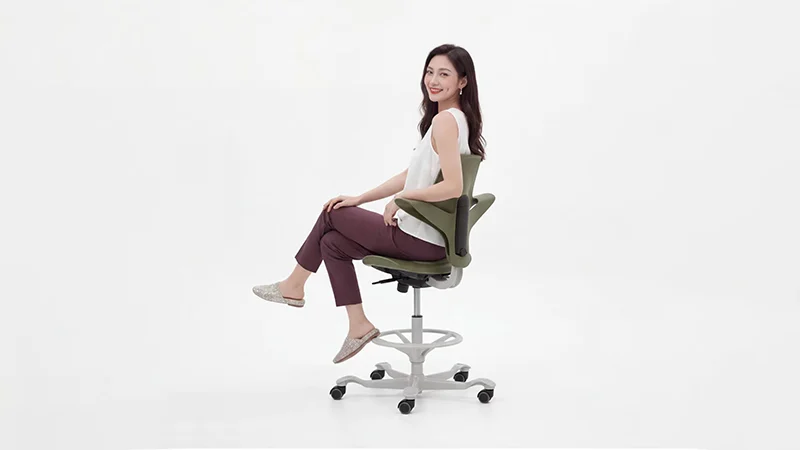
Saddle chairs position the user with hips open (approximately 135 degrees) and thighs sloping downward, mimicking the posture of a horseback rider. The distinctive saddle-shaped seat distributes weight across the sitting bones while allowing the legs to move freely.
The spine maintains its natural S-curve because the pelvis remains neutral rather than rotating backward. Some models, like the Active Pony, incorporate a 7-degree tilt mechanism that “lends subtle, healthy motion as you work”.
Pros
✓ Superior spinal alignment: Maintains lumbar lordosis better than any other active seating option
✓ All-day comfort: Designed for extended use, not just short sessions
✓ Freedom of movement: Legs can move freely, making it easy to transition to standing
✓ Task stability: Provides enough stability for precise work (writing, mouse use)
✓ Height versatility: Works well at standing-height desks and traditional workstations
Cons
✗ Learning curve: Requires adjustment period for muscles unaccustomed to active sitting
✗ No backrest: Some users miss the ability to lean back
✗ Surface height requirement: Works best with higher-than-standard desks or a footrest
✗ Initial muscle soreness: Core and back muscles may ache during adaptation
Best Applications
- Office workers who spend 6+ hours daily at a computer
- Healthcare professionals (dentists, surgeons, therapists) who lean forward frequently
- Designers and architects working at drafting tables or high surfaces
- Anyone with chronic lower back pain from conventional seating
Kneeling Chairs: The Posture Prompter
How They Work
Kneeling chairs feature a forward-sloping seat pad combined with padded supports for the shins. This position opens the hip angle to approximately 120 degrees and shifts some body weight to the shins, reducing pressure on the tailbone.
The design prevents slouching by making it physically uncomfortable to round the back—poor posture causes you to slide forward or lose balance.
Pros
✓ Immediate posture improvement: Makes slouching nearly impossible
✓ Reduced tailbone pressure: Weight distributed between seat and shin pads
✓ Compact design: Generally smaller footprint than full office chairs
✓ No adjustment period: Users typically adapt quickly
Cons
✗ Shin discomfort: Pressure on shins becomes uncomfortable after 1-2 hours
✗ Limited movement: Legs are constrained by the shin pads
✗ Difficult transitions: Standing up requires maneuvering around the chair
✗ Not for full-day use: Best as an alternative to, not replacement for, primary seating
Best Applications
- Task rotation: Alternating with a conventional chair throughout the day
- Short-duration tasks: Reading, phone calls, creative thinking sessions
- Rehabilitation: Under guidance, for specific postural retraining
- Small spaces: Apartments or home offices where footprint matters
Balance Ball Chairs: The Core Activator
How They Work
Balance ball chairs replace a traditional seat with an inflated exercise ball, either mounted on a frame or used alone. The unstable surface forces constant micro-adjustments from core and back muscles to maintain balance.
These chairs directly apply principles from exercise physiology to the workplace, treating sitting as an active rather than passive activity.
Pros
✓ Maximum core engagement: Activates deep abdominal and back muscles continuously
✓ Calorie burn: Increased muscle activity slightly elevates energy expenditure
✓ Fun factor: Many users enjoy the bouncing and movement
✓ Exercise integration: Easy to transition from sitting to ball exercises
Cons
✗ Stability challenges: Difficult to perform precision tasks (detailed drawing, fine mouse work)
✗ Fatigue: Core muscles tire, leading to compromised posture later in the day
✗ Size issues: Balls must be precisely sized to user height for proper ergonomics
✗ Safety concerns: Risk of rolling or falling, especially during transitions
✗ Professional appearance: May look inappropriate in formal office settings
Best Applications
- Active breaks: Short sessions interspersed with conventional seating
- Creative work: Brainstorming, phone calls, casual tasks
- Home offices: Informal environments where appearance is less critical
- Fitness-integrated workspaces: For users specifically seeking exercise while working
Expert Recommendations
Based on our analysis of user needs and ergonomic principles, here are our recommendations:
For the Full-Time Office Worker
Choose a Saddle Chair. Only saddle chairs provide the combination of spinal support, all-day comfort, and task stability needed for 40-hour work weeks. The adjustment period is worthwhile for the long-term benefits.
For the Hybrid Worker
Consider a Saddle Chair + Conventional Chair rotation. Use the saddle chair for 2-3 hours at a time, alternating with a high-quality ergonomic task chair. This variation prevents any single posture from becoming fatiguing.
For the Student
Try a Kneeling Chair for study sessions. The immediate posture correction helps maintain focus during reading and note-taking. Supplement with breaks for movement.
For the Creative Professional
A Balance Ball Chair can spark movement during brainstorming. But keep a stable chair nearby for detailed work requiring precision.
For Rehabilitation (Under Guidance)
All three have therapeutic applications. Consult a physical therapist or ergonomist for personalized recommendations based on specific conditions.
Making the Transition: Tips for Success
Whatever active seating you choose, follow these guidelines:
Start Gradually: “Start with shorter sessions, around an hour a day, and increase gradually. It’s normal to feel some muscle soreness at first as the body adapts to new movement patterns”.
Listen to Your Body: Discomfort is normal during adaptation; pain is not. If you experience sharp or persistent pain, discontinue use and consult a professional.
Create Variation: “The best working position is always your next one”. Alternate between active seating, standing, and conventional sitting throughout the day.
Optimize Your Setup: Ensure your desk height, monitor position, and input devices are properly adjusted for your chosen seating.
Still Have Questions?
Choosing between active seating options depends on your body, work style, and specific needs. Our ergonomics specialists are here to help.
[Contact Our Team] → [Schedule an Ergonomics Consultation]