The workplace is undergoing its most significant transformation since the Industrial Revolution. Remote work, hybrid schedules, and evolving employee expectations have fundamentally altered not just where we work, but how we think about work itself.
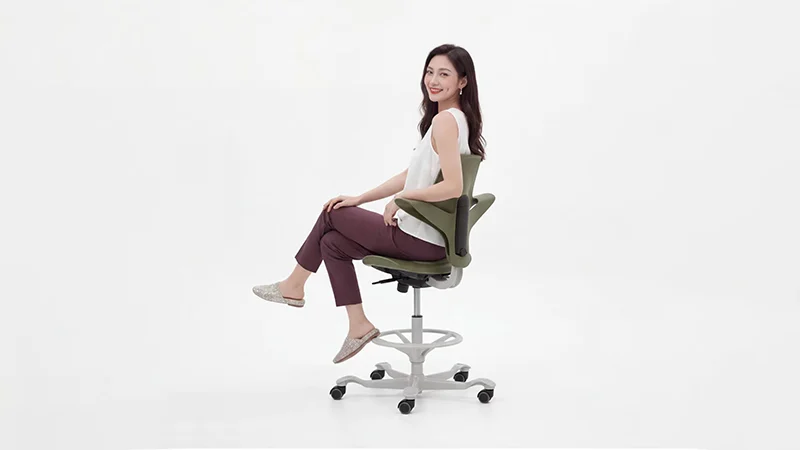
At the center of this transformation sits—or rather, moves—a new philosophy of workplace design. The future of work isn’t about better chairs; it’s about better movement. And furniture that supports this shift is no longer optional—it’s essential.
Part 1: The Sedentary Crisis
Let’s start with the problem. Before the pandemic, researchers already understood the health risks of prolonged sitting. The Canadian Centre for Occupational Health and Safety documented that “static postures”—remaining in one position for extended periods—contribute significantly to musculoskeletal disorders.
The numbers are stark:
- Office workers spend an average of 7.7 hours per day sitting
- Prolonged sitting increases risk of cardiovascular disease by 147%
- Musculoskeletal disorders account for one-third of all work-related illnesses
- Back pain alone costs businesses over $100 billion annually in lost productivity and healthcare
Then came 2020. Remote work eliminated commutes (more sitting in cars/trains) and blurred boundaries between work and leisure (more sitting at home). Many workers found themselves sitting more than ever, often on poorly designed furniture never intended for full-time use.
The sedentary crisis had become a sedentary epidemic.
Part 2: The Movement Revolution
But crisis breeds innovation. As awareness of sitting-related health risks grew, so did demand for solutions. The concept of “active sitting” moved from ergonomic niche to mainstream necessity.
“The best working position is always your next one,” explains the team at AJ Products. “The body thrives on movement. That’s why an active chair works best as a complement to a traditional office chair. The ideal setup is to alternate between sitting, standing and active sitting”.
This philosophy represents a fundamental shift. Instead of searching for the perfect chair, we now recognize that variety itself is the goal. Movement isn’t something that happens between work sessions—it’s something that should happen during them.
Part 3: The Science of Movement-Friendly Design
What makes furniture “movement-friendly”? The answer lies in understanding how bodies naturally behave.
Micro-movements: Throughout the day, our bodies make hundreds of tiny adjustments—shifting weight, crossing and uncrossing legs, leaning forward and back. These micro-movements pump blood through muscles, refresh spinal discs, and prevent stiffness. Good movement-friendly furniture accommodates and encourages these natural shifts.
Posture variation: No single posture is ideal for extended periods. Movement-friendly design makes it easy to change positions—from upright to reclined, from sitting to perching to standing.
Transition ease: The best movement-friendly furniture eliminates friction. Getting up should require no thought, no mechanism release, no maneuvering around armrests.
Saddle chairs exemplify these principles. Their open design allows unrestricted leg movement, easy standing transitions, and constant micro-adjustment. The Active Pony takes this further with a 7-degree tilt that “allows users to gently rock in all directions and thus engage more muscles than when sitting normally”.
Part 4: The WELL Building Standard and Corporate Responsibility
Movement-friendly furniture isn’t just about individual health—it’s increasingly a corporate responsibility metric. The WELL Building Standard, the leading framework for healthy buildings, explicitly requires movement-promoting furniture and workstation flexibility.
Forward-thinking companies recognize that investing in employee health pays dividends:
Investment Area ROI
Ergonomic furniture 3:1 return through reduced injury claims
Sit-stand workstations 15% productivity increase reported
Active seating programs 25% reduction in reported back pain
Movement breaks 20% improvement in cognitive performance
The 2026 Workstation White Paper emphasizes that “the integration of height-adjustable technology is no longer a luxury—it is a physiological necessity for maintaining leadership stamina”.
Part 5: The Hybrid Workplace Challenge
Hybrid work adds another layer of complexity. Employees now split time between home offices and corporate workplaces, often with vastly different furniture at each location.
This fragmentation creates risks. A worker might have an ergonomic saddle chair at the office but work from a kitchen stool at home, creating postural inconsistency and potential for injury.
The solution? Movement-friendly furniture must be:
Portable: Easy to move between locations
Adjustable: Accommodating different work surfaces and user preferences
Universal: Effective for diverse body types and work styles
Durable: Withstanding the demands of daily use, wherever it occurs
Part 6: The New Generation of Workers
Demographics are driving change as well. Gen Z and younger millennials have grown up with different expectations about work and wellness. They’re less willing to tolerate discomfort as a job requirement and more likely to prioritize health in employment decisions.
For this generation, movement-friendly furniture isn’t a perk—it’s a baseline expectation. They’ve seen parents suffer from desk jobs and are determined to avoid the same fate. Companies that ignore this shift will struggle to attract and retain top talent.
Part 7: Technology Integration
The future of movement-friendly furniture includes smart technology. Already, we’re seeing:
Sitting sensors: Track time in position and prompt movement breaks
Posture monitoring: Provide real-time feedback on spinal alignment
Workstation synchronization: Automatically adjust desk height and chair position based on user preferences
Health integration: Sync with wearables to optimize movement throughout the day
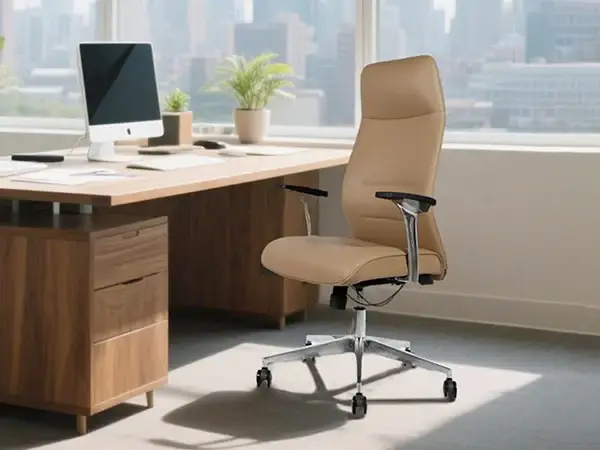
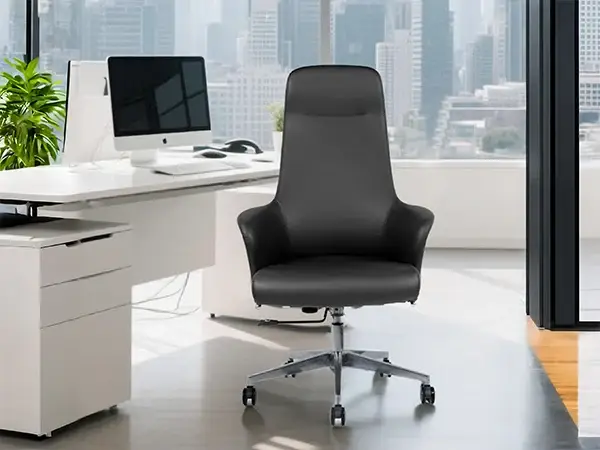
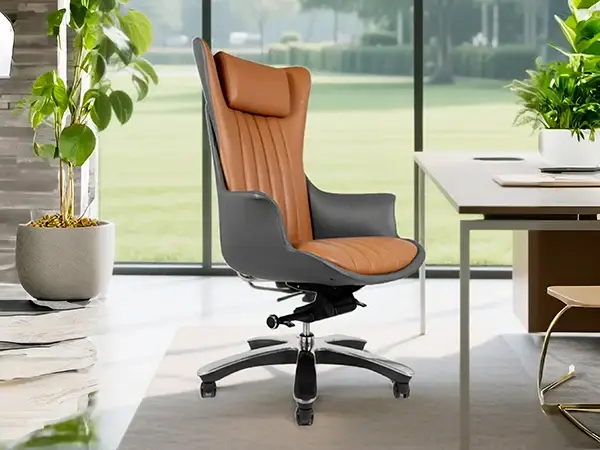
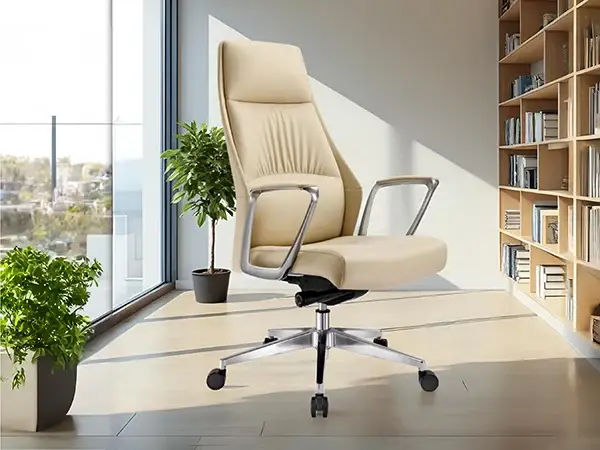
The Forma executive chair, for instance, features “a self-adapting headrest, 4D armrests, and adjustable seat depth”—all adjustable to support movement while maintaining professional aesthetics.
Part 8: Sustainability and Movement
Interestingly, the movement toward active seating aligns with sustainability goals. Movement-friendly furniture tends to be:
More durable: Designed for long-term use rather than replacement cycles
Less material-intensive: Often simpler construction with fewer components
More repairable: Modular designs allow component replacement rather than whole-chair disposal
The Pony Saddle exemplifies this approach. It’s manufactured in TRUE Zero Waste facilities, uses materials free from harmful chemicals, and each chair produced contributes positively to carbon, water, and energy through offset programs.
Part 9: Implementing Movement-Friendly Design
Ready to embrace the future of work? Here’s how to implement movement-friendly design in your organization:
For Individuals
- Audit your current setup: How many hours do you spend sitting? In what positions?
- Introduce variety: Alternate between sitting, standing, and active seating throughout the day
- Follow the 20-8-2 rule: 20 minutes sitting, 8 standing, 2 moving -10
- Invest strategically: Choose one high-quality active seating option rather than multiple mediocre ones
For Organizations
- Conduct a workplace assessment: Identify where movement is restricted or discouraged
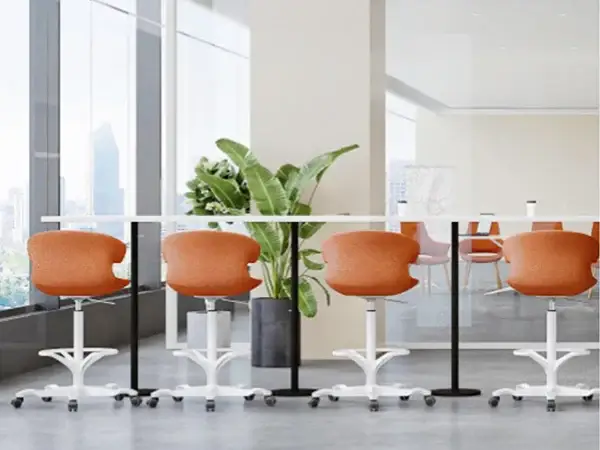
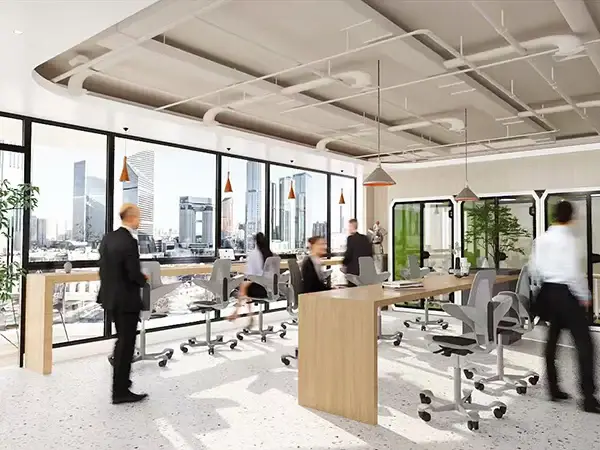
- Create movement zones: Designate areas with active seating options for shared use
- Provide choice: Offer multiple active seating types so employees can find what works for them
- Educate and train: Ensure employees understand how to use movement-friendly furniture effectively
- Lead by example: Ensure leadership embraces movement-friendly practices
Part 10: The Bottom Line
The future of work is moving—literally. Organizations that embrace movement-friendly design will see benefits across multiple dimensions:
- Healthier employees: Reduced injury rates, fewer sick days
- More productive teams: Better focus, higher energy
- Stronger recruitment: Attracting talent that values wellness
- Lower costs: Reduced healthcare claims, longer furniture lifecycles
- Better sustainability: Alignment with environmental goals
Movement-friendly furniture isn’t an expense; it’s an investment in the most important asset any organization has: its people.
Ready to Move Forward?
The future of work is here. Explore our collection of movement-friendly seating, designed for the way we work today and tomorrow.
[View Active Seating Collection] → [Contact Our Workplace Strategy Team]